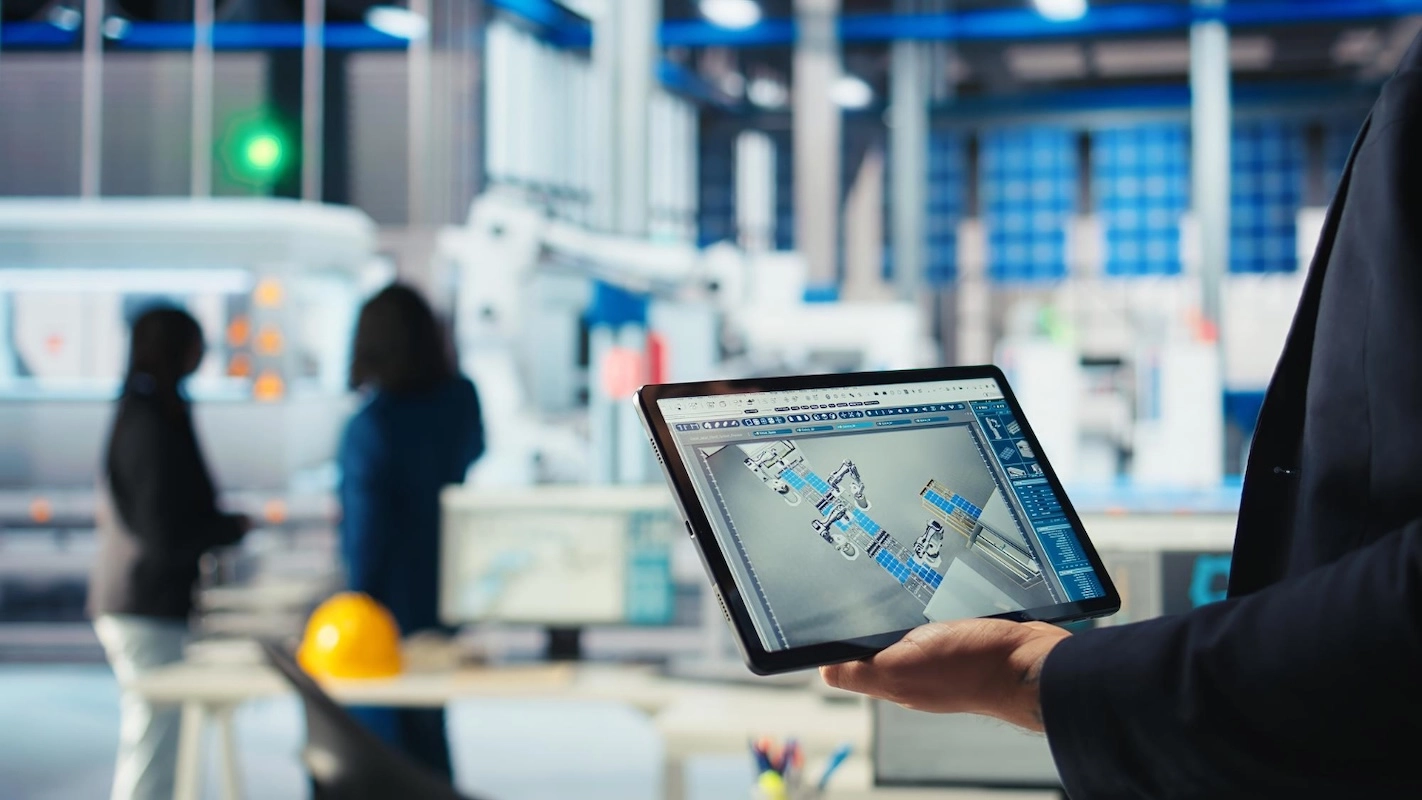
Simplify carbon management, energy efficiency, and reporting processes by gathering energy and sustainability data on a single platform. Be ready for the future with digital transformation.
Today, energy efficiency and sustainability have become not only an environmental responsibility for businesses but also a strategic competitive advantage. However, in many organizations, energy, carbon emission, and sustainability data are still maintained in a fragmented manner across different systems. This leads to errors in analysis processes, inefficiency, and delays in making accurate decisions. Therefore, consolidating energy and sustainability data onto a single digital platform is critical for both operational visibility and environmental performance.
Thanks to this approach, all energy consumption points, carbon emission sources, and sustainability indicators can be monitored from a single center. Powered by artificial intelligence, data analytics, and IoT technologies, these platforms detect energy losses, increase efficiency, and provide businesses with a robust data infrastructure for sustainable growth. In short, energy management is no longer just about analyzing historical data; it is becoming an intelligent and integrated process that shapes the future.
Concepts such as energy management, sustainability, data analytics, carbon management, energy efficiency, and digital platforms are now among the strategic priorities of businesses. Today, accurately measuring energy consumption and environmental impacts is of great importance not only for operational efficiency but also for corporate reputation and regulatory compliance.
However, for many businesses, energy and sustainability data are still scattered across different systems. This situation both complicates analysis processes and hinders the making of accurate strategic decisions. This is where digital solutions that consolidate energy and sustainability data into a single platform come into play. These systems enable businesses to manage their energy performance, carbon footprint, and environmental targets from a centralized structure.
Energy and sustainability management rely on consistent and reliable data to make accurate decisions. However, in many businesses, this data is stored in different systems, departments, and formats. Data coming from different devices, energy meters, and suppliers often lacks an integrated structure. This leads to data losses, misinterpretations, and wasted time during analysis processes.
Data fragmentation makes it difficult not only to monitor energy performance but also to track sustainability goals. When companies attempt to manually consolidate data from different sources, the risk of error increases, and the accuracy of strategic decisions diminishes. Therefore, collecting data in a single center is no longer a choice; it has become a necessity that provides a competitive advantage.
This fragmentation leads to problems of accuracy and transparency in areas such as energy optimization, carbon reporting, and sustainability performance. Consolidating energy management data onto a single digital platform eliminates these issues.
The single platform approach refers to collecting energy and sustainability data from diverse sources and consolidating it within a centralized digital infrastructure. This system makes all energy consumption points, production facilities, carbon emissions, and environmental indicators manageable through a single dashboard. Thus, businesses can monitor their energy performance holistically and make strategic, data-driven decisions.
This approach eliminates manual reporting processes while enhancing data accuracy and accessibility. Simultaneously, by working in integration with AI-powered analytics tools, it provides businesses with insights to increase energy efficiency. Consequently, the single platform approach aims not merely to consolidate data but to establish a culture of smart energy management across the enterprise.
This integrated structure facilitates the tracking of not only energy performance but also sustainability goals.
Consolidating energy and sustainability data on a single platform provides significant advantages from both operational and environmental perspectives. Collecting all data in a single system reduces errors while making the energy flow transparent and traceable. This allows businesses to rapidly detect energy losses and carry out optimizations.
Furthermore, integrated data management makes a major contribution to reducing carbon footprints, lowering costs, and facilitating sustainability reporting. Managers can plan future energy strategies more accurately by analyzing historical consumption data. In this way, businesses both fulfill their environmental responsibilities and achieve financial efficiency.
In the era of Industry 4.0, digitalization has taken energy management beyond manual monitoring. Smart metering systems, automation solutions, and cloud-based platforms make energy efficiency goals achievable.

Businesses can now measure not only energy consumption but also the quality of energy and its environmental impacts. In this way, energy costs are optimized, and sustainability strategies are built on solid foundations.
Carbon footprint management is one of the most critical components of sustainability strategies. Thanks to digital systems, emission data resulting from energy consumption, fuel usage, and production processes can be collected automatically. This enables businesses to monitor carbon emissions in real-time and identify opportunities for improvement.
Digital carbon tracking does not merely simplify the monitoring process; it also ensures reporting compliance with international standards. Platforms that operate in integration with standards such as CBAM, ISO 14064, and the GHG Protocol help businesses gain reliability regarding both regulatory compliance and sustainability targets.
This integration ensures that the entire business, not just sustainability departments, acts with environmental sensitivity.
Artificial intelligence (AI) is radically changing decision-making processes in energy management. AI-supported systems analyze energy consumption data to identify patterns, detect anomalies, and predict future energy needs. This approach is revolutionary, particularly for increasing energy savings and preventing unplanned energy losses in large-scale facilities.
AI-powered energy analytics accelerates decision-making processes while minimizing human error. These systems identify areas with the highest energy losses and offer automatic optimization suggestions. Thus, businesses not only analyze the past but also develop proactive energy strategies for the future.
In this way, energy management transforms into a process that shapes the future rather than just analyzing the past.
Collecting energy and sustainability data on a single platform brings with it the responsibility of data security. Modern platforms ensure the protection of sensitive information using advanced encryption technologies and access management systems.
Furthermore, compliance with ISO 50001 (Energy Management) and ISO 27001 (Information Security) standards provides businesses with both legal assurance and credibility in the eyes of customers.
The future of energy management is being shaped by digital technologies and automation solutions. Technologies such as digital twins, blockchain-based data sharing, and autonomous energy systems will enable businesses to manage energy flows more intelligently and reliably. These trends allow energy data to be transformed into a structure that is not merely monitored but actively managed.
In the coming years, energy management systems will become increasingly integrated with AI-supported decision models and real-time analysis. In this way, businesses will be able to develop data-driven strategies not only for consumption optimization but also for achieving carbon-neutral goals.
These technologies will elevate energy management from being a mere operational requirement to a strategic element of sustainable growth.
Gathering energy and sustainability data under a single digital roof forms the foundation of corporate sustainability. This approach offers the ability to manage energy consumption, carbon emissions, and operational efficiency simultaneously. Thus, businesses both strengthen their financial performance and transition to eco-friendly production models.

An energy ecosystem managed through a single platform brings not only efficiency but also transparency and sustainability. Real-time data analysis accelerates reporting processes and facilitates decision-making. Consequently, businesses gain a future-ready, resilient, and low-carbon energy infrastructure.
Thanks to this integration, businesses:
In short, the sustainable businesses of the future will be those that consolidate their data on a single smart platform.
Data integration speeds up the analysis process, ensures accuracy, and supports strategic decisions.
It can be applied in all fields, including manufacturing, energy, construction, retail, food, automotive and public sector.
No. Easily compatible systems with existing energy meters and IoT sensors can be integrated .
Automated carbon calculation is performed by multiplying the energy consumption data by the emission fold numbers.
By analyzing consumption data, the AI detects abnormalities and suggests savings opportunities.
Yes, it provides a direct cost advantage by reducing energy waste and optimizing consumption.
Data security is ensured by encryption, access control and ISO 27001 compliance.
Yep. Thanks to their scalable structure these can be usef from SMEs to large industrial facilities.
Yep. The system generates automated reports in accordance with reporting standards such as ESG and CBAM.
Digital twins, AI-powered energy forecasting and carbon-neutral integration solutions will stand out.