Boost process efficiency in smart facility management with IoT sensors, artificial intelligence, and data analytics. Discover how digitalization is revolutionizing process automation and energy management.
Smart facility management, IoT sensors, data analytics, energy efficiency, process automation, and digital energy management have become key concepts in today's industrial transformation. In the Industry 4.0 era, facilities are no longer just physical structures that produce; they are transforming into digital organisms that collect data via sensors, analyze it, and optimize their own performance.
IoT-based systems lie at the center of this transformation. Every machine, pump, motor, or energy line in the factory is equipped with sensors and begins generating data. This data is processed by advanced analytical algorithms, providing managers with visibility at every stage, from production processes to energy consumption. Consequently, facilities not only achieve energy savings but also reduce maintenance costs, increase process efficiency, and reach sustainability goals faster.
Smart facility management refers to the digitalization of physical processes and their management through mutually integrated systems. In this approach, IoT sensors, energy management software, SCADA systems, and cloud-based analytics platforms operate in coordination. The aim is to make all operational processes both visible and optimized.
Key digital components used in smart facility management:
While maintenance, energy monitoring, or production control are generally handled manually in traditional facility management, these operations are performed automatically in smart facilities. For example, when a sensor in a cooling unit detects a temperature rise, the system can automatically intervene or send energy consumption reports to management. This structure both increases efficiency and eliminates human error.
Major advantages provided by smart facility management:
IoT (Internet of Things) is one of the most important building blocks of smart facility management. IoT sensors collect real-time data from components such as machines, motors, pumps, HVAC systems, and energy lines in facilities. This data includes parameters such as temperature, humidity, pressure, current, energy consumption, and performance. The collected data is analyzed on a centralized platform, providing facility managers with full visibility into operational processes.
Thanks to this infrastructure, field equipment transforms into smart systems that not only operate but also communicate with each other and report their status. In facilities equipped with IoT technology, faults are detected before they occur, energy waste is minimized, and maintenance processes are automated. In short, IoT eliminates the reactive management approach and offers a proactive, data-focused facility management model.
This system provides not only monitoring but also creates a proactive decision-making mechanism. For example:
Consequently, thanks to the IoT infrastructure, facilities transition to a predictive management model rather than a reactive one.
Millions of data points collected from IoT sensors do not hold meaning on their own; data analytics transforms this information into valuable insights. Analytical software analyzes this data to generate strategic information regarding energy consumption, production performance, machine efficiency, and maintenance requirements. Thus, decision-making processes are now based on data, not intuition.
Data analytics does not merely analyze the current situation; it provides businesses with foresight capabilities by predicting future trends. For example, a system analyzing a machine's historical performance can determine a potential failure date in advance or identify hours of highest energy intensity to suggest cost-cutting strategies. In this way, facility management becomes smarter, faster, and more economical.
Advanced analytical systems provide the following benefits:
In this way, facility managers can make strategic decisions by accessing not only past performance but also future-oriented predictions.
In smart facilities, digitalization is not limited to production processes alone; energy management is also integrated into these systems. Each machine or production line is monitored for energy consumption, and this data is transferred to a central energy management platform. Thus, exactly how much energy a specific process consumes and where losses occur can be clearly analyzed.

Thanks to this integrated approach, production processes can be redesigned from an energy efficiency perspective. For example, high energy-consuming equipment can be identified to optimize operating times, or alternative energy sources can be utilized. The combination of energy management and process efficiency is one of the strongest steps in sustainable production.
Digital energy management solutions provide the following advantages:
This structure provides not only a cost advantage but also contributes to sustainability goals by reducing the carbon footprint.
Artificial intelligence (AI) has advanced enough to replace human decisions in smart facility management. AI systems analyze big data from IoT sensors, evaluate historical trends, and determine the most efficient operating scenarios. In this way, energy consumption, production performance, and maintenance plans are automatically optimized.
Artificial intelligence is not merely a decision support mechanism but also a learning system. It increases decision accuracy over time with the data it acquires. For example, AI analyzing energy fluctuations in a production line can take proactive action when the same conditions arise. Thus, facility management becomes safer, uninterrupted, and more economical.
For example:
Consequently, artificial intelligence does not merely analyze data; it transforms it into action to enhance the overall performance of the business.
In smart facilities, digital integration enables all systems to communicate with each other. When energy management, production control, maintenance planning, and data analytics merge on a single platform, facilities gain full visibility. This integrated structure offers managers not only past reports but also instant operational insights.
The most important advantage of digital integration is the ability to instantly notice inefficiencies and take action. Furthermore, processes such as fault management, energy balancing, and resource planning become automated. In this way, businesses both increase production capacity and minimize energy losses. Integration is a key factor in smart facilities achieving sustainable success.
Major advantages:
Energy efficiency lies at the heart of digital facility management. Thanks to IoT sensors and analytical software, energy consumption is monitored instantly, unnecessary usage is detected, and optimization is performed. These systems facilitate achieving environmental sustainability goals, not just cost advantages.
In terms of sustainability, digitalization helps facilities reduce their carbon footprint. Through the prevention of energy losses, the integration of renewable energy sources, and smart control systems, contributions are made to both the environment and the business economy. Thus, facilities take on an important role in the transition to a green production model.
Smart facility management in terms of sustainability:
In this way, digitalization instills not only operational efficiency but also a sense of environmental responsibility into the facility culture.
The facilities of the future will be fully integrated smart systems where all processes are managed on a single digital infrastructure. These structures ensure data sharing at every point, from production to energy, from maintenance processes to the supply chain. IoT sensors, SCADA systems, artificial intelligence, and cloud analytics form the foundation of this integration.
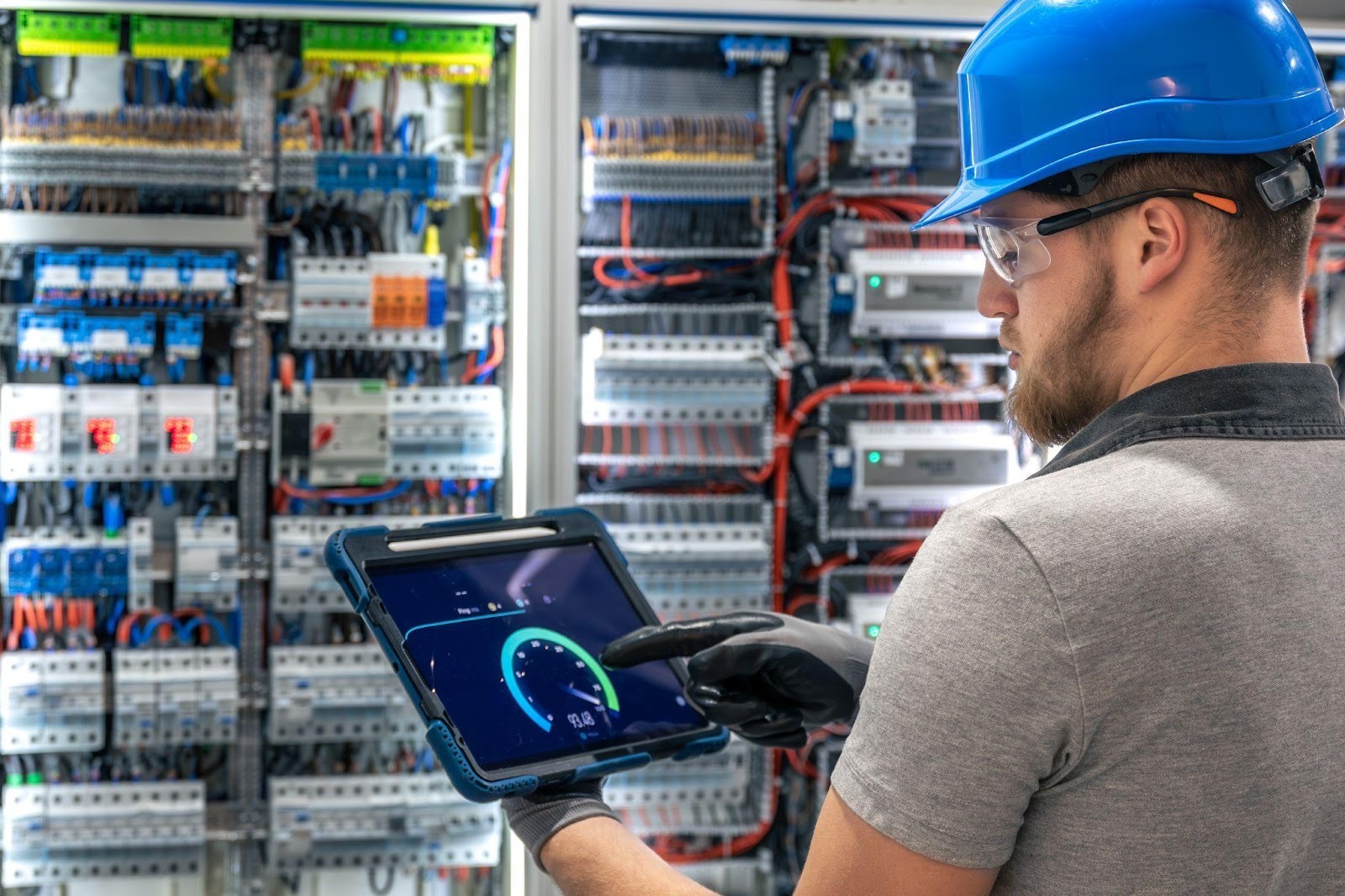
Fully integrated facilities provide both operational and environmental efficiency. Production processes are monitored in real-time, energy usage is optimized, and resource waste is prevented. This transformation, projected for 2025 and beyond, will create a paradigm shift supporting not only efficiency but also sustainable industrial growth.
New generation facility management will be shaped by the following technologies:
When these technologies combine, the facilities of the future will be energy-efficient structures equipped with "digital intelligence."
The integration of IoT and data analytics is transforming both the operational and environmental performance of smart facilities. Thanks to real-time data tracking, predictive maintenance, energy monitoring, and automated optimization, facilities are becoming not just "functioning" systems, but learning and evolving ones.
Therefore, for businesses aiming for energy efficiency and process integration, digitalization has now become not a choice but a necessity for sustainable competitiveness.
It is a management model in which all production and energy processes are digitally monitored and optimized with IoT and data analytics-based systems.
Sensors collect data such as temperature, current, pressure, energy consumption and transmit them to decision support systems.
The collected data is analyzed and unnecessary energy use is detected and optimization is carried out.
Thanks to predictive maintenance, malfunctions are detected in advance, unplanned stops are prevented.
It is a digital system that monitors the energy consumption of the plant through sensors and performs automatic balancing.
AI analyzes production data, optimizes energy consumption and predicts maintenance needs.
5G will evolve into autonomous, self-managed facilities with artificial intelligence and digital twin technologies.
Data is protected by encrypted transmission, access control and cyber firewalls.
These are systems that enable the monitoring, analysis, and optimization of energy consumption through software.
It can be used in energy, manufacturing, food, chemical, automotive, logistics and infrastructure sectors.